A cracked iPhone screen forces a choice
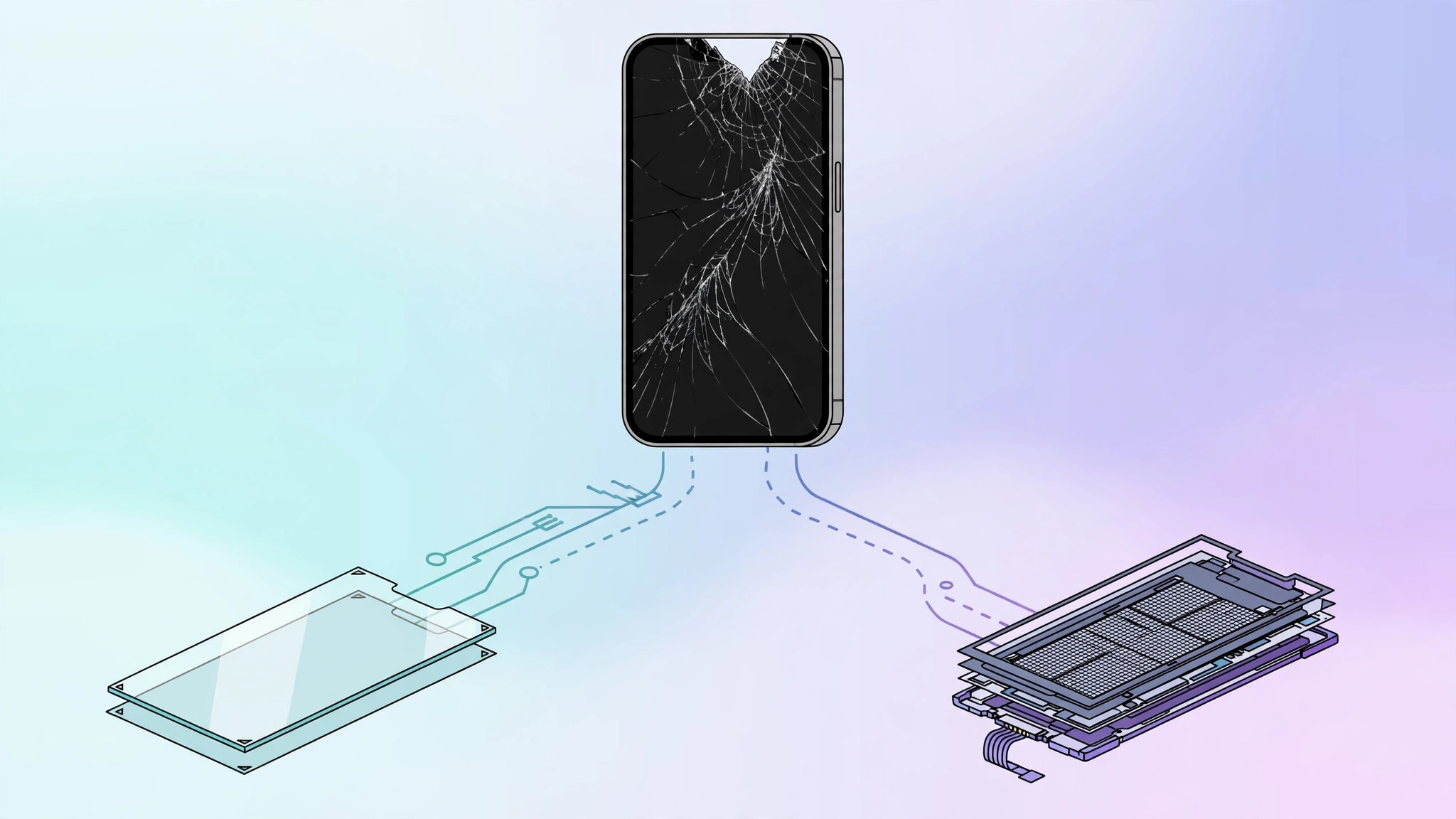
A cracked iPhone screen always brings the same question: can you replace just the glass, or do you need the whole display? Repair guides from iFixit — the gold standard for DIY repair — show that both options exist, but they are not interchangeable. Apple Support and Tom’s Guide generally recommend full display replacement through official channels. Here’s how to decide what’s right for your situation.
Step 1: Diagnose the damage first
Before pricing anything, figure out what actually broke:
- Only the glass is cracked. If the picture is perfect — no dead spots, lines, or flickering — and touch responds everywhere across the screen, the display panel underneath is fine. In this case glass-only replacement is technically possible.
- The display itself is damaged. If you see black spots, colored stripes, flickering, no image at all, or touch fails in some areas, the OLED/LCD panel is broken. Then a full display module replacement is your only option — no amount of glass work will bring it back.
Glass-only replacement: cheaper but riskier
Swapping just the glass is cheaper because the original display panel — the most expensive part — stays. That is the entire appeal. But there are serious caveats:
- It needs professional equipment. The cracked glass must be separated from the panel with a heated separator and bonded to new glass with a laminating machine. This is not a kitchen-table job, no matter what some video tutorials suggest.
- The technician’s skill decides the outcome. A poor glass-only job leaves air bubbles, dust, or uneven touch response — and one slip can kill the panel, turning a cheap repair into a full replacement anyway.
- It only suits glass-only damage. If the diagnosis in step 1 shows any panel damage, this route is off the table.
Full display replacement: the safer choice
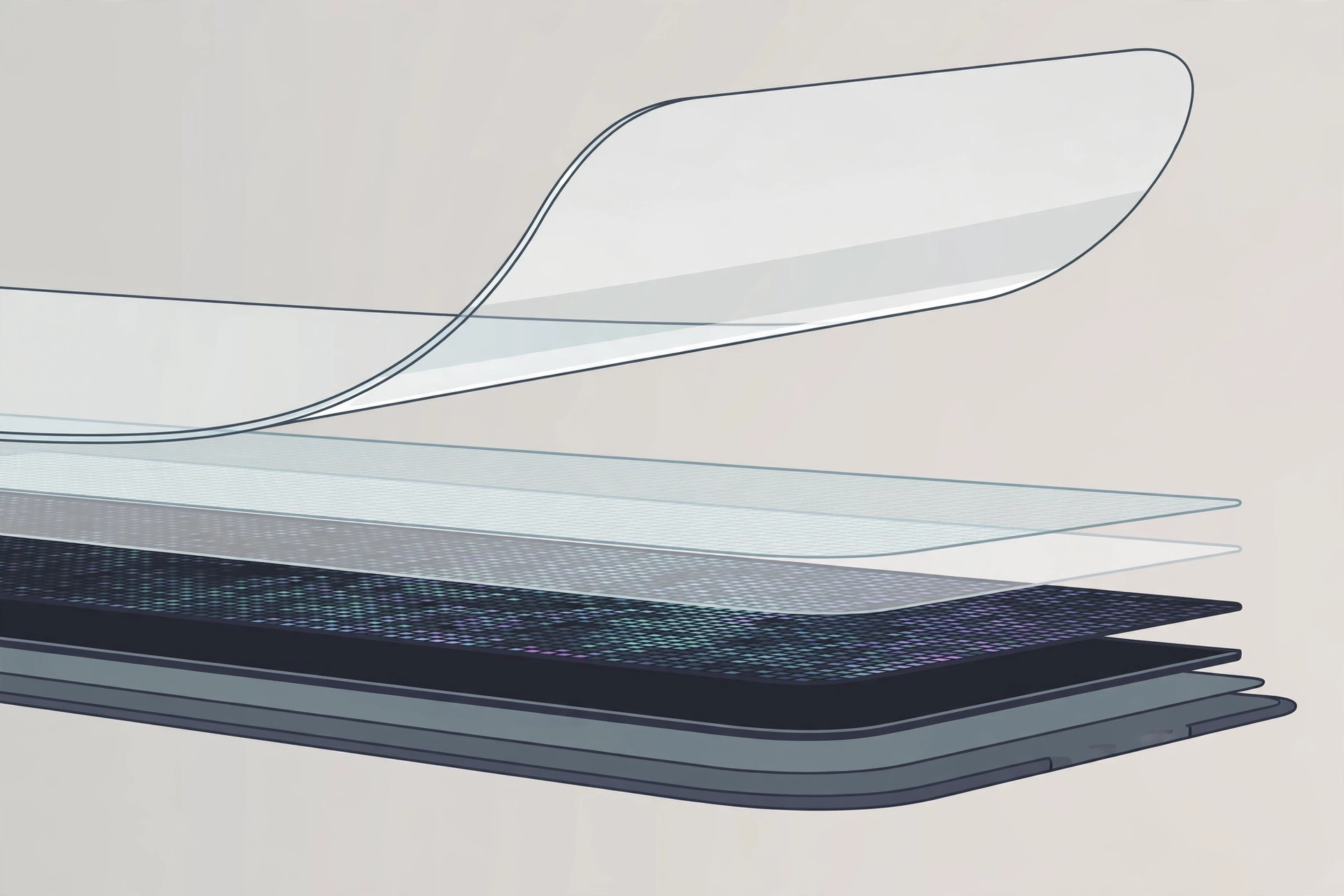
Replacing the whole display module — glass, digitizer, and panel as one fused unit — is what most repair shops (and Apple) actually do, especially on modern iPhones with fused OLED assemblies:
- Faster and more reliable. The technician swaps one pre-tested module instead of performing micro-surgery on yours.
- No risk of killing your panel. Since the whole assembly is new, there is nothing fragile being reheated and re-laminated.
- Higher cost. You pay for a complete display unit, which is noticeably more than a glass-only job — but it’s the price of certainty.
If it still doesn’t work
If touch acts up or the screen looks off after any repair, take the phone back immediately — a reputable shop stands behind its work and will redo it. If you bought a cheap third-party display online, poor color calibration and dead True Tone are common; an original or high-quality replacement module avoids this. And while you’re protecting your repaired phone, consider cosmetic tweaks like the iOS 26 Liquid Glass lock screen clock — and learn to take HDR screenshots on iPhone and iPad to document your phone’s condition.
FAQ
Is glass-only repair worth it?
Only if the damage is truly glass-only AND you find a genuinely skilled technician with proper laminating equipment. For most people, the modest savings don’t justify the risk — a full display replacement is the smarter, longer-lasting fix.
Does replacing the screen affect Face ID or water resistance?
Full module replacement by a competent shop keeps Face ID working (the TrueDepth hardware isn’t part of the display). Water resistance, however, is never factory-grade after any opening — make sure the phone is properly resealed and add a case plus tempered glass to avoid a repeat.
Conclusion
Glass-only replacement wins on price but demands rare expertise and a healthy panel; full display replacement costs more but is faster, safer, and the standard for modern iPhones. Whichever you choose, test everything thoroughly before leaving the shop.